Architecting Your Immigration Destiny !


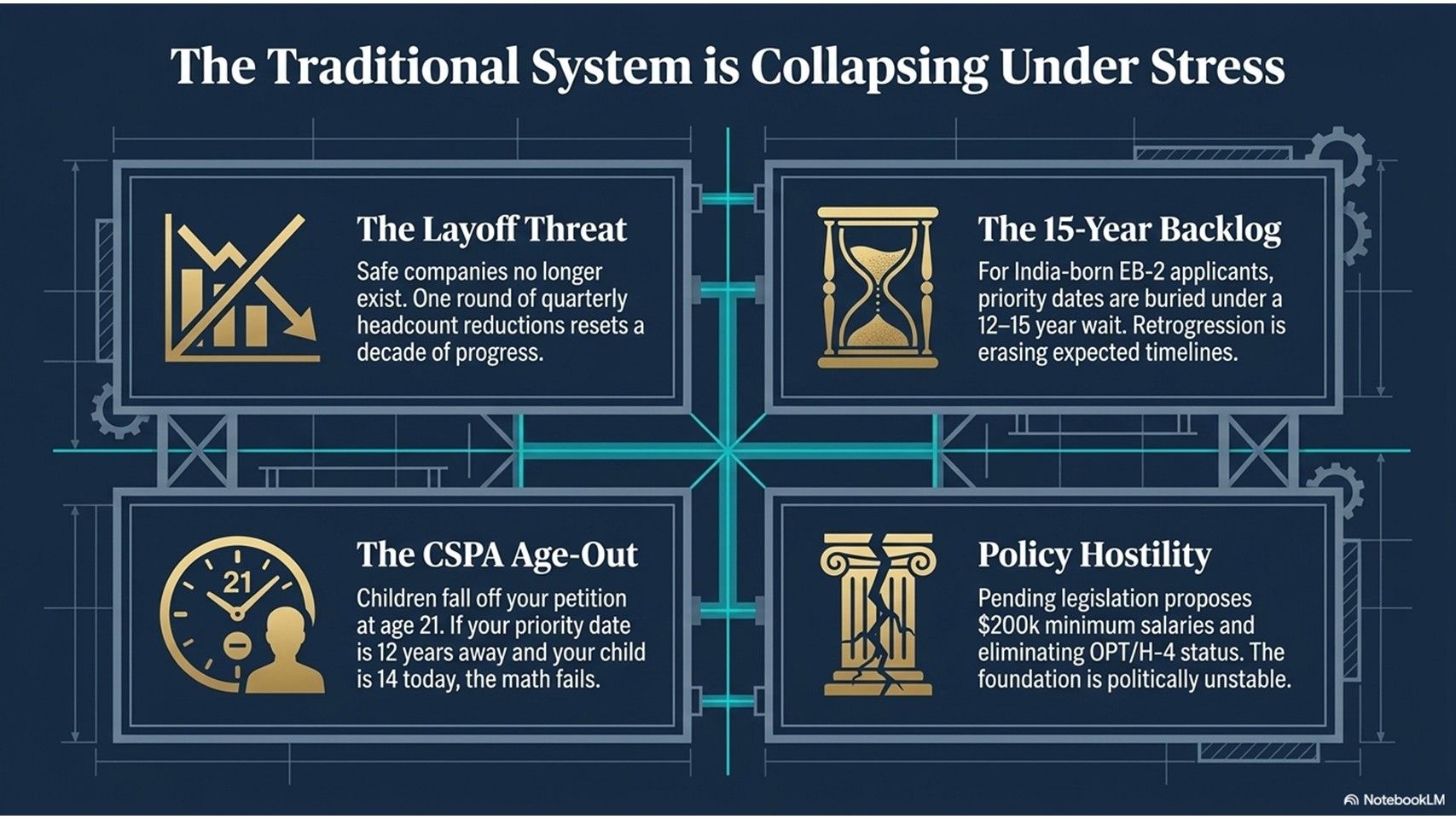
The Cracks in the Employer-Sponsored Foundation For two decades, the standard immigration plan for India-born H-1B professionals was to rely on an employer for PERM and I-140 processing and simply wait. Today, that foundation is breaking under the weight of compounding pressures. Major tech layoffs are no longer rare—in early 2026, Oracle alone cut 30,000 jobs, abruptly starting a strict 60-day calendar clock for impacted H-1B workers to either find a new sponsor or leave the country. Compounding this instability is a massive green card backlog that stretches 12 to 15 years. During this long wait, children risk turning 21 and "aging out" of their parent's application, losing their path to permanent residency entirely. Relying solely on an employer is no longer a plan; it is merely a hope.
Designing a New Path: Self-Petitioning Professionals can take control of their immigration destiny through self-petitioning pathways that do not require an employer sponsor or a PERM labor certification. The two primary routes are the EB-1A (Extraordinary Ability) and the EB-2 NIW (National Interest Waiver). A critical governing principle to understand is that your job title or occupation is not dispositive. USCIS does not approve or deny cases simply because a job title sounds important or ordinary; instead, they evaluate whether the individual's documented work, field impact, and external recognition meet the legal standard.
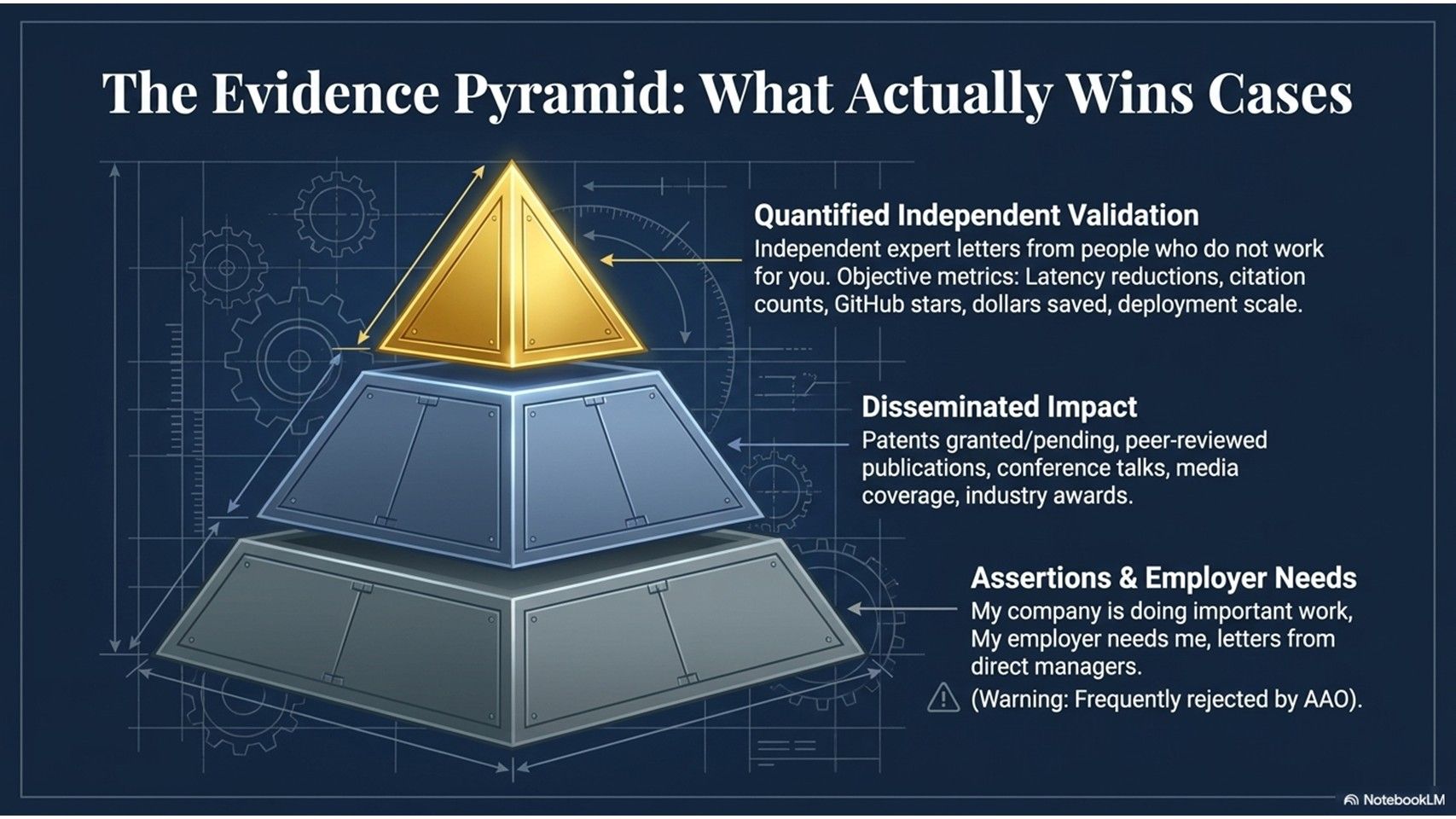
Constructing a Winning Record Successful petitions are built on concrete, verifiable evidence rather than mere assertions. Petitions must quantify the applicant's impact using objective metrics like latency reductions, dollars saved, citation counts, or GitHub downloads. Crucially, independent evidence consistently outweighs testimony from your own employer. Securing letters from independent industry experts—such as senior officials at contracting companies or peers who do not work for you—is one of the most persuasive ways to validate your work's significance.
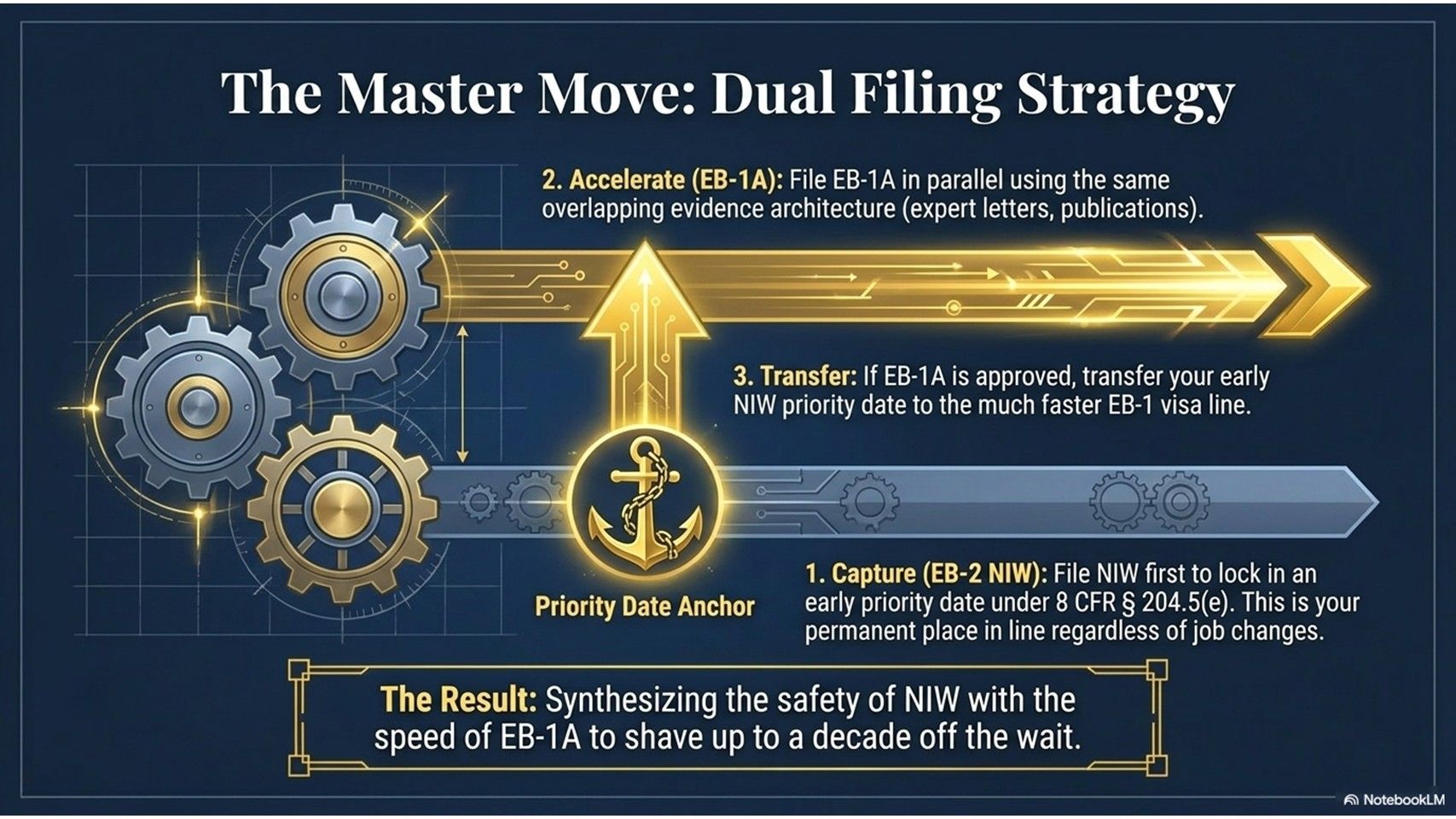
The Master Strategy: Dual Filing A powerful strategic maneuver for India-born applicants is "dual filing". By filing an EB-2 NIW first, you lock in an early priority date and secure your place in the green card line. Because the evidence overlaps significantly, you can then file an EB-1A in parallel or shortly after. If the EB-1A is approved, your earlier NIW priority date transfers to the much faster EB-1 line. If the EB-1A is denied, your NIW remains active, ensuring your priority date is completely protected.
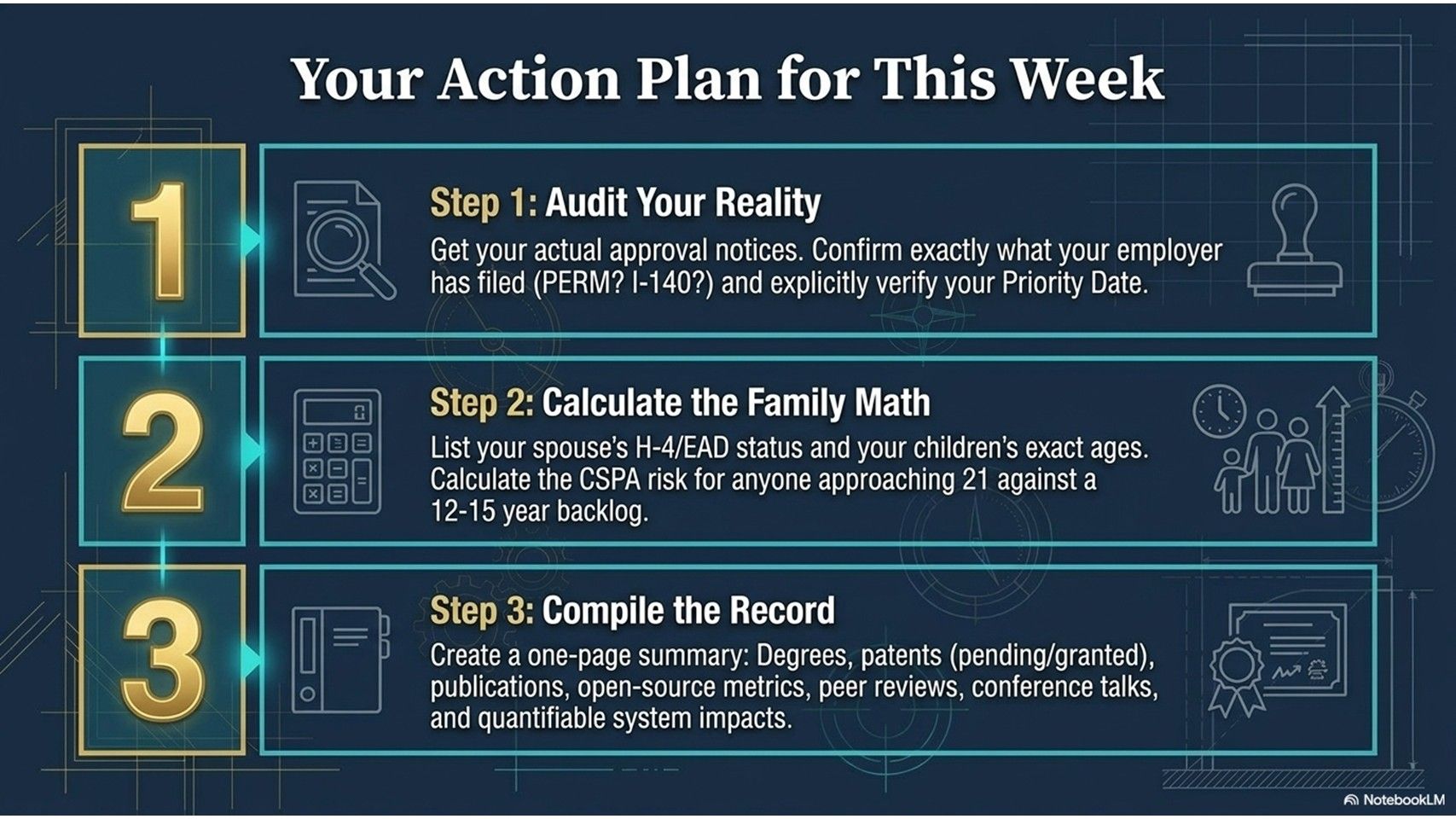
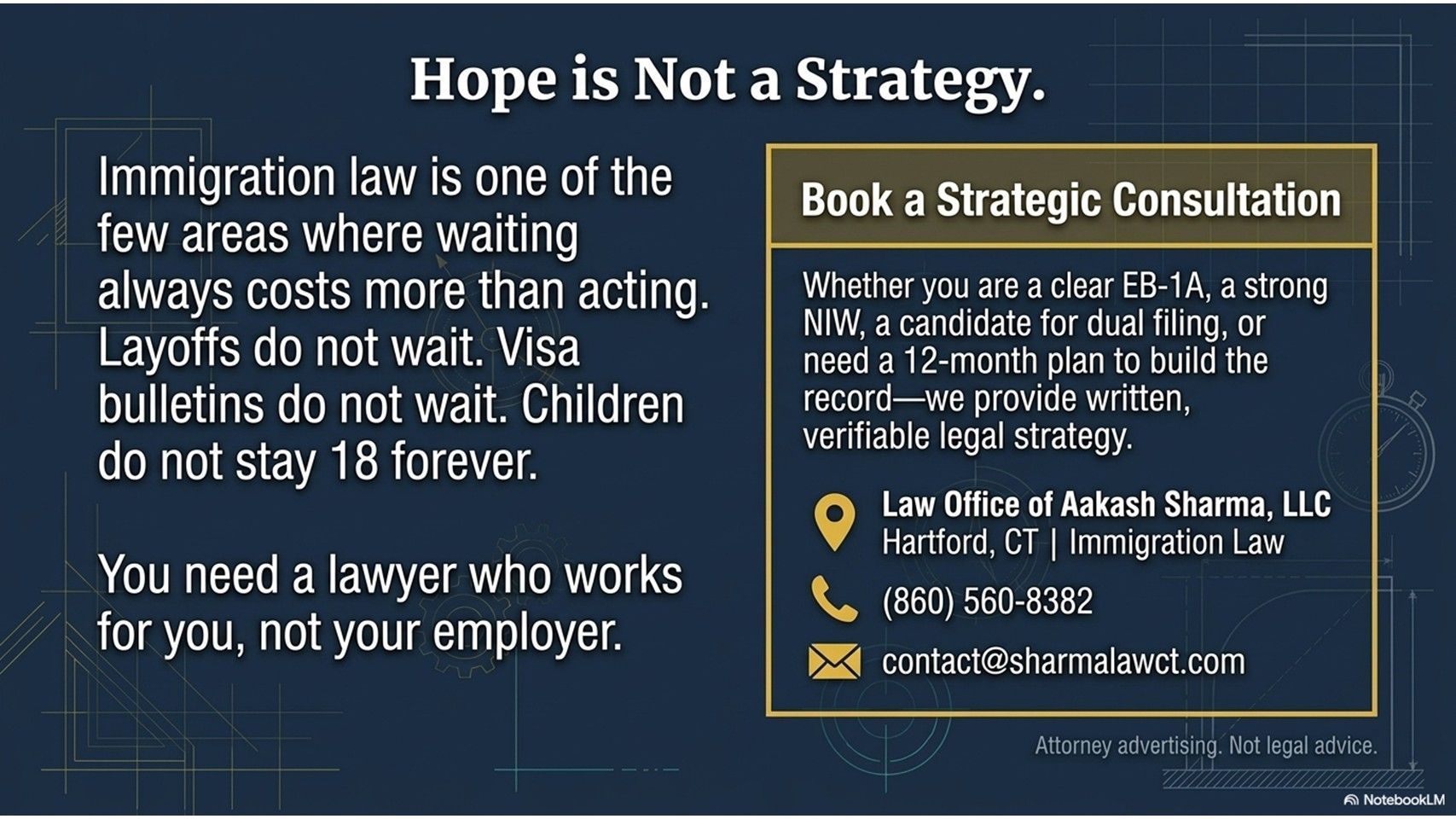
Taking Action Immigration law is an area where waiting almost always costs you more than acting. Professionals should proactively compile a one-page summary of their career—detailing degrees, publications, patents, awards, and quantified impact—and sit down with an independent immigration lawyer to evaluate their specific options. Having a documented plan ensures you are ahead of the curve before the next layoff cycle or visa bulletin retrogression impacts your family's future.
Attorney Advertising | created with AI NotebookLLM